
Flooring contractors on Long Beach Island and in Barnegat, NJ
Hardwood, engineered, vinyl plank, laminate and tile — installed and refinished. Chosen for a house that gets sand walked into it all summer and then sits closed all winter.
(609) 622-5647Free estimates.
10 years on the tools — and what is under the floor matters more than what goes on top of it.
Long Beach Island and mainland Ocean County. Beach Haven, Ship Bottom, Surf City, Harvey Cedars, Barnegat Light, Brant Beach, Loveladies, Holgate, Beach Haven Terrace, Barnegat, Manahawkin, Stafford Township, Waretown, Forked River, Tuckerton, Little Egg Harbor, Toms River — and everywhere in between.

Alex Vega, owner. Vega Construction LLC, Barnegat, New Jersey.
The contractor you are actually hiring
Alex Vega owns Vega Construction and is on the job himself — ten years in the trade, based in Barnegat and working the island and the mainland around it.
A floor is the one surface in a house that is judged with bare feet, in daylight, every single day. It is also the one where almost all of the work that decides the outcome happens before the first plank goes down.
Flat matters more than most people are told. So does the moisture in whatever is underneath. A floor laid over a subfloor that was out of flat will telegraph every dip, and planks laid without checking moisture will move — and neither of those is a defect in the floor you chose.
We are carpenters, which on a floor job means the part under it is not somebody else’s problem. Soft spots, a sagging bay, squeaks that come from the subfloor rather than the surface — that gets dealt with while the floor is up, which is the only sensible time to deal with it.
Registered as a home improvement contractor with the New Jersey Division of Consumer Affairs, and insured. The registration number is at the bottom of this page and you can check it yourself in about thirty seconds.
What we do on floors
Whole houses, single rooms, and the preparation underneath that decides how either one turns out.
Hardwood and engineered
We supply and install it, or install what you have already chosen. Either way we acclimate it in the house first and lay it to a moisture reading rather than to a calendar — and we say which of the two the quote covers.
Vinyl plank and laminate
We install the click-together and glue-down systems that suit a lot of houses out here. The install looks simple and is not: it is only as flat and as quiet as the floor underneath, and the flattening is a line in our quote rather than an assumption.
Tile floors
We tile entryways, mudrooms, laundry rooms and sunrooms — the rooms that take the worst of what comes in from outside, and usually the best place to spend on something harder than wood.
Sanding and refinishing
We sand existing hardwood back and finish it again. A fraction of the price of replacing, days instead of weeks, and most floors have more left in them than their owners assume — we will tell you free of charge whether yours does.
Subfloor levelling and repair
We flatten, patch, replace sheet goods that have been wet, and sort out squeaks and soft spots while the floor is open and reaching them costs nothing extra. Quoted as its own line so you can see what the preparation costs against the material.
Transitions and thresholds
We handle where two materials meet, where a floor meets a door, and where heights do not match — including trimming door bottoms when a new floor raises them. Done badly it is what you notice and trip on; done properly you never think about it.
Floors in a bathroom or a kitchen are usually part of remodelling that room, and those two pages cover how we handle them. Deck boards are their own thing, and so is the structural repair underneath a floor that has really gone.
Recent work
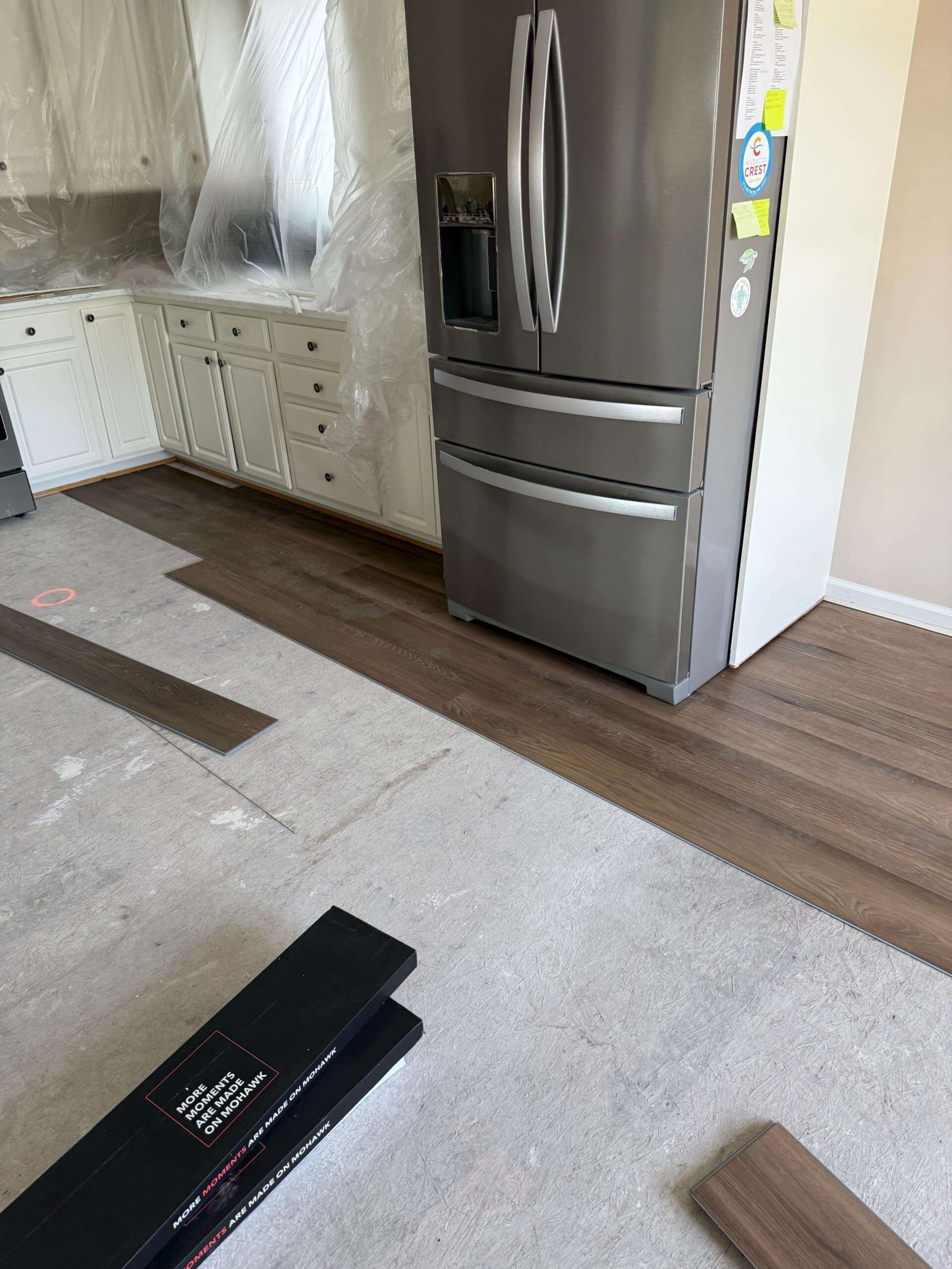
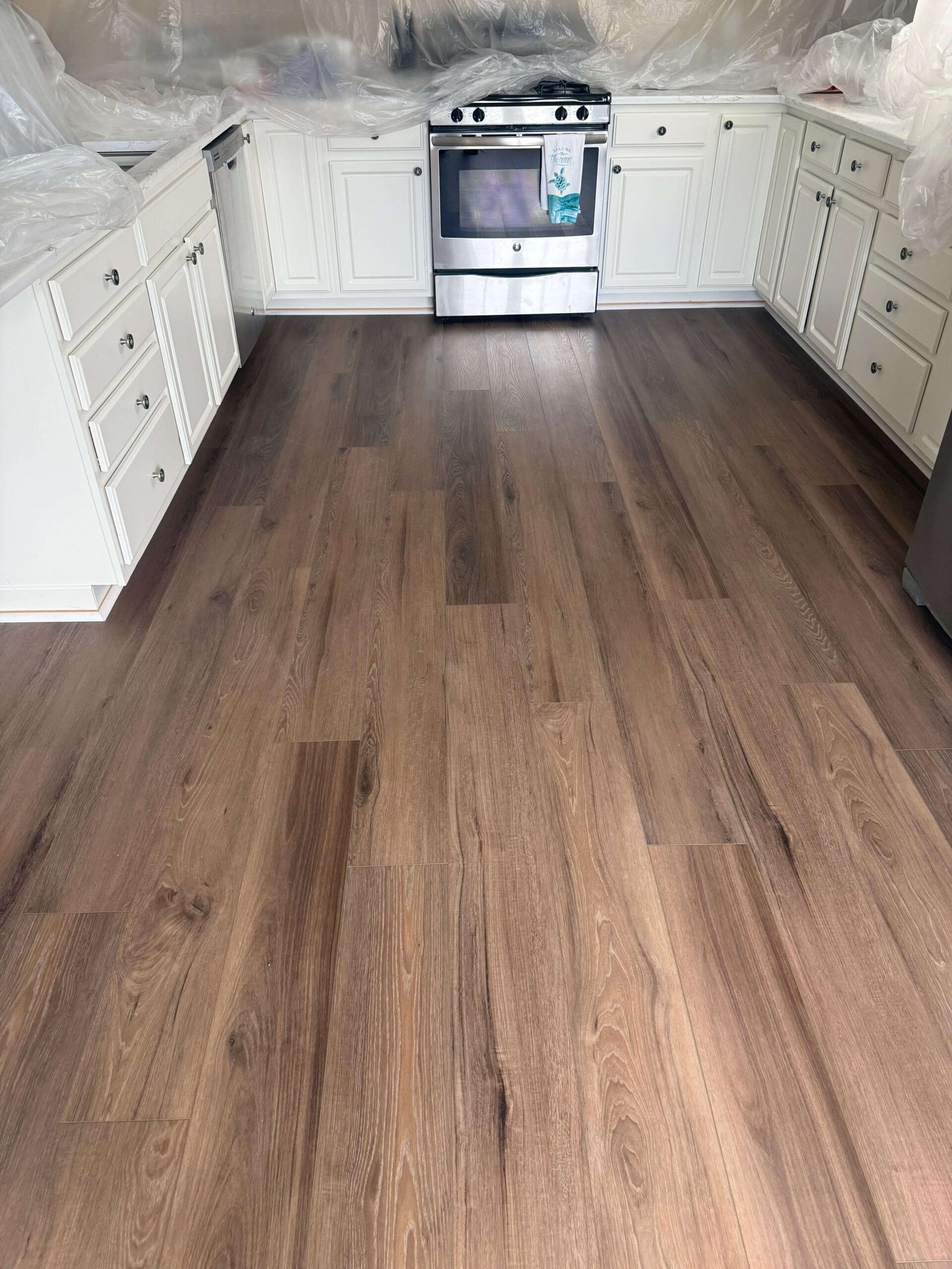
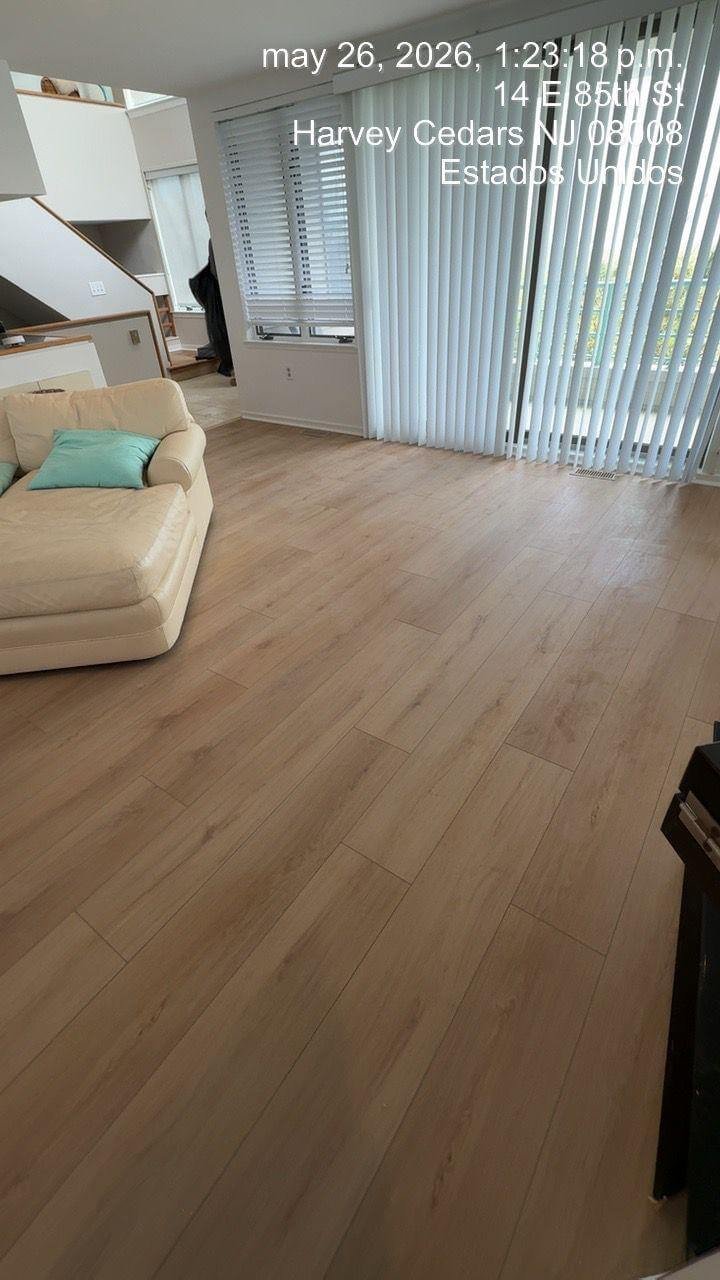
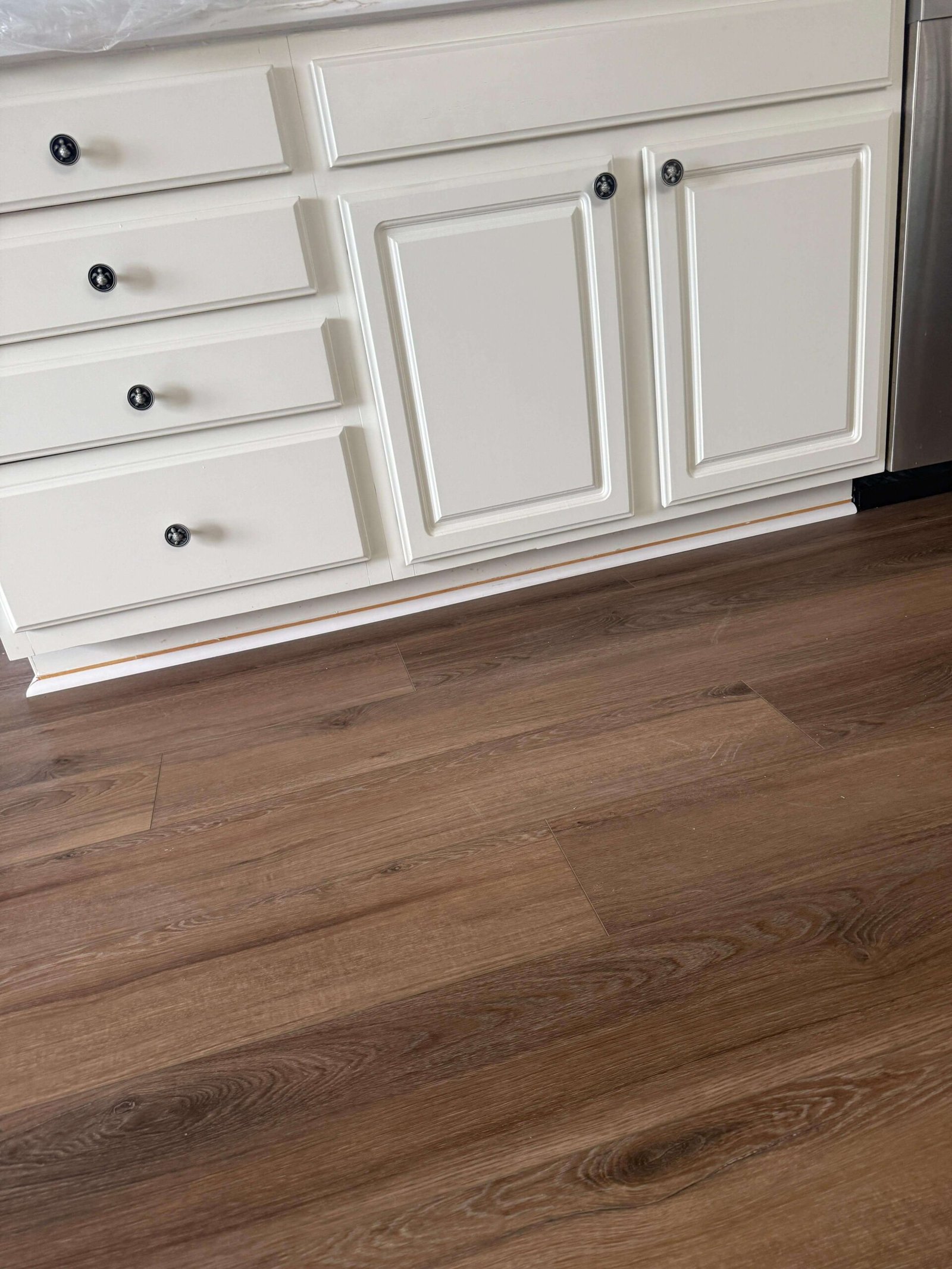
Floors of ours around Long Beach Island and Ocean County. Send us a photo of yours — one of the room and one at a doorway where the edge of the boards shows — and we will tell you what it would take.
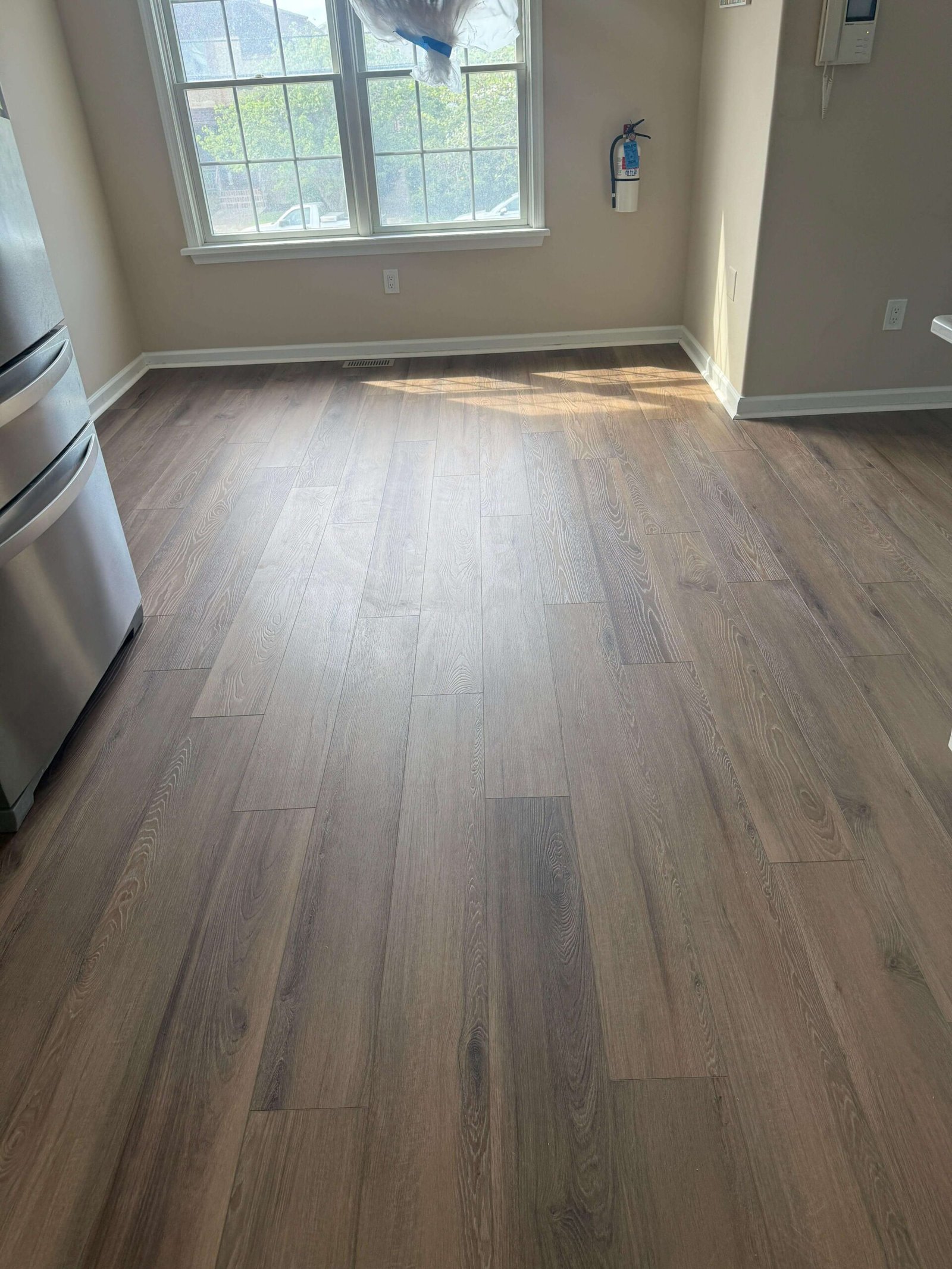
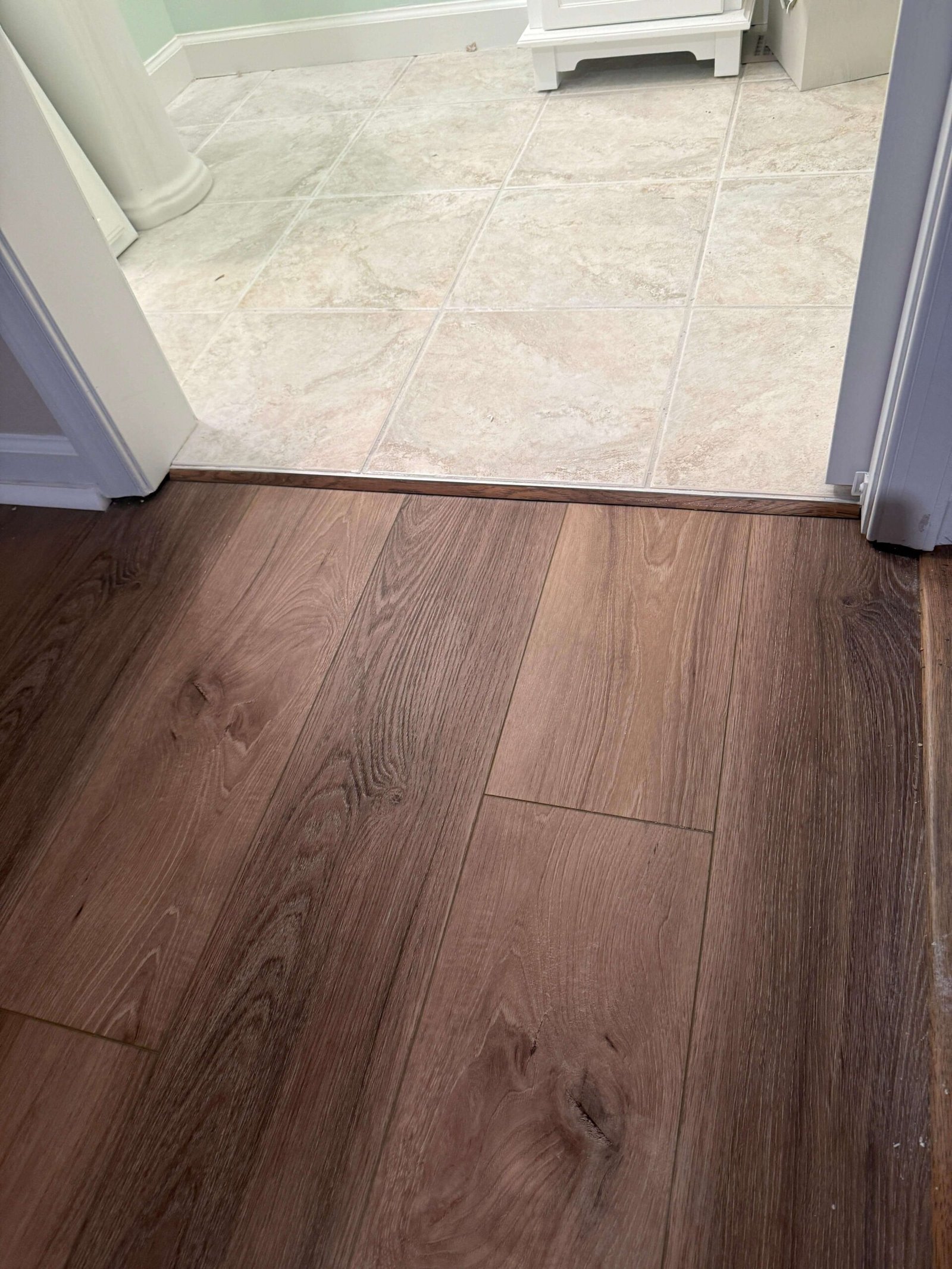
Sand is the thing that decides your floor
Not the colour, not the brand, not the warranty. The sand that comes through the door every day from June to September.
Sand is not dirt. Dirt sits on a floor; sand works on it. Every grain underfoot is doing the same thing a sheet of sandpaper does, all day, in exactly the places people walk most — the door from the deck, the hallway, the kitchen approach.
That one fact changes the whole conversation. A floor and a finish that would last fifteen years three towns inland can look tired here in four summers, and nobody warned the owner because the person who sold it was selling a product, not a location.
So the right questions are different out here. How hard is the wear layer, not how thick is the plank. How easily can this be refreshed in five years without pulling it up. What happens where sand and water arrive together, at the back door. And honestly: is wood the right answer in that particular room at all.
Sometimes it is, and we will say so. Sometimes the right answer is wood through the house and something harder at the two doors that face the beach. That is not a compromise — it is designing around the thing that is actually going to attack the floor.
None of this makes a floor last forever. It makes the difference between refreshing a floor and replacing one.
What we ask before recommending
- Which door people actually come in through
- Whether the house is rented in summer
- Whether anyone comes in straight off the beach
- Dogs, and how many
- How long you plan to keep the house
- Whether you want to be able to refinish it later
Choosing a floor for a house you rent out
A rental floor is not a family floor that gets used more. It is a different problem.
In a rental the floor takes a year of wear in ten weeks, from people who are not being careful and are not taking their shoes off. Suitcases get dragged. Beach chairs come in wet. Nobody sweeps the sand out before walking across it, because it is not their floor.
And it has to photograph well, which is a real constraint and not a vain one. The floor is in every listing photo of every room.
What that rules out is anything that cannot take water at a doorway, anything that shows every scratch, and anything that cannot be touched up in sections. What it tends to favour is a harder wearing layer, a mid-tone that does not show sand or scratches, and a floor that can be refreshed between seasons instead of replaced between owners.
It also favours doing the work in the off-season. We measured that on the bathroom side of this business — the searching peaks in January and bottoms out in December, because the work has to be finished before the first booking rather than around it. A floor is the same: it needs the house empty and it needs time to acclimate.
What matters in a rental floor
- A wear layer that survives sand, not just feet
- A tone that hides grit between cleanings
- Something that can be fixed in sections
- Water tolerance at the doors that face outside
- Quiet — no clicking or hollow spots
- Finished before the season, not during it
What is underneath decides how it goes down
Almost every floor complaint we get called about is a complaint about the subfloor.
A new floor is laid on whatever is already there, and whatever is already there has been quietly doing things for decades. It may be out of flat. It may have been wet. In an older house near the water, both are likely.
Flat is not the same as level. A floor can slope gently across a room and be fine; what it cannot do is dip and rise within a short distance. A floor laid over that bridges the low spots — which is where hollow sounds, clicking, separated joints and early wear all come from. On a click-together floor it is the single most common cause of failure, and it gets blamed on the flooring every time.
Moisture is the other half. Wood moves with it, and a house that sits closed and humid for months and is then cooled hard in July is asking a floor to change size twice a year. Measuring what is underneath before anything is ordered, and letting the material sit in the house before it goes down, is the difference between a floor that stays put and one that cups or gaps in its first year.
So that is where our estimate starts: not with what you want on top, but with what is under there now.
What we check first
- Flatness over short distances, not just the slope
- Moisture in the subfloor and under the house
- Soft spots, movement and squeaks
- What the existing floor is sitting on
- Height at every doorway and threshold
- Whether an old floor can simply be refinished
Before replacing it, find out what is left in it
A tired hardwood floor and a worn-out one look identical from standing height. They are not the same floor.
Solid hardwood can usually be sanded back and finished again several times across its life. What most people are looking at when they decide to replace is a finish that has failed, not wood that has. The boards underneath are often fine.
Engineered flooring can sometimes be refinished too, depending on how thick the real wood layer on top is — which is worth finding out before anyone tears it out, because it varies enormously.
Refinishing costs a fraction of replacing and does not change the heights at any doorway, which quietly saves a second set of problems with thresholds and door bottoms.
We will tell you when that is the honest answer even though it is the smaller job. And when a floor genuinely is done — sanded past its depth already, water damage through the boards, or gaps that will not close — we will say that instead of selling you a sanding that disappoints you.
Usually still refinishable
- Solid hardwood that has not been sanded repeatedly
- Scratches and dullness in the finish only
- Pet marks and traffic lanes
- Boards that are sound underfoot
- A colour you have simply stopped liking
- Engineered floors with a thick enough wear layer
How the job goes
Step 1
We measure and check underneath
Free, on your schedule. Flatness, moisture, soft spots and every doorway height — before anybody talks about materials.
Step 2
Scope and price in writing
What preparation is included, what the material is, what happens at the transitions, and what changes if lifting the old floor shows something.
Step 3
Preparation, then acclimation
Old floor out, subfloor flattened and repaired, and the new material left in the house to settle to it. This step is the one that gets skipped and the one that causes the callbacks.
Step 4
We lay and finish it
Laid out so the room reads right, cut to the walls, transitions and trim fitted, and the site cleaned up. Same crew from the first measurement to the last threshold.
Where we work
Based in Barnegat and working the island and the mainland around it.
Long Beach Island
Beach Haven, Ship Bottom, Surf City, Harvey Cedars, Barnegat Light, Brant Beach, Beach Haven Crest, North Beach, Loveladies, Holgate, Beach Haven Terrace, Spray Beach, Haven Beach
Southern Ocean County
Barnegat, Manahawkin, Stafford Township, Waretown, Ocean Acres, Tuckerton, Little Egg Harbor, West Creek, Mystic Island
Northern Ocean County
Forked River, Lacey Township, Toms River, Beachwood, Island Heights, Bayville, Seaside Heights, Seaside Park
Questions people ask us
The ones that come up on nearly every estimate.
What does a floor cost per square foot?
Any per-foot number quoted before seeing the subfloor is a guess, and the part that moves the price is exactly the part nobody can see yet. Two identical rooms with the same material can be very different jobs depending on what is underneath.
We will come and measure it for free, and the written scope will separate the preparation from the material so you can see which is which.
Is wood a bad idea this close to the water?
Not at all — plenty of houses out here have had wood floors for fifty years. What matters is choosing with the conditions in mind and preparing properly, rather than assuming what works inland works here.
Where wood genuinely struggles is right at a door that opens onto sand and water. That is often one or two rooms, not the house.
Can my old hardwood be saved?
More often than people expect. Solid hardwood can be sanded and refinished several times, and what usually looks worn out is the finish rather than the wood.
Send a close photo of the worst area and one of a doorway where you can see the edge of the boards, and we can usually tell you before coming out.
Can you lay a new floor over the old one?
Sometimes, and it is tempting because it is quicker. The catch is that it inherits every problem of the floor underneath — including flatness and any moisture — and it raises every doorway height, which then has to be dealt with at the thresholds and often at the doors.
We will tell you honestly whether it is sensible in your house rather than whether it is possible. It is usually possible.
Why do floors click or sound hollow?
Almost always because the surface underneath was not flat enough and the floor is bridging a low spot. It gets blamed on the material, but the material was laid over a problem.
That is why flattening is a line in our scope rather than something assumed, and why we measure it before quoting rather than after lifting the old floor.
How long before we can walk on it?
It depends on the material and the finish, and we will give you real dates in writing rather than a slogan. A finish needs its own time to cure and rushing it is how a new floor gets marked in its first week.
If there is a booking or a date it has to be ready for, tell us at the estimate. That changes how we sequence it.
Do you move the furniture?
Yes, that is part of the job and it is in the scope rather than a surprise on the day. Anything you would rather handle yourself, say so and we will plan around it.
Do you handle the rest of the house too?
¿Hablan español?
Yes. Hablamos español. Call, text or send photos in either language and you will get an answer in the same one.
What our clients say
A floor is the one surface people judge barefoot, every day. This is what the last owners said about ours.
Straight from our Google profile
Not selected, not edited. These are the reviews on our Google Business Profile, shown here as they were written.




Send a photo of the floor
One of the room, one close up on the worst area, and one at a doorway where the edge of the boards shows. That last one tells us the most.
Vega Construction LLC · New Jersey Home Improvement Contractor · Barnegat, NJ · Serving Long Beach Island and Ocean County